Tenant-scoped event memory
Typed events, source links, embeddings, vector search, and Cypher traversal sit behind one API. Memory is evidence, not a loose note store.
Platform
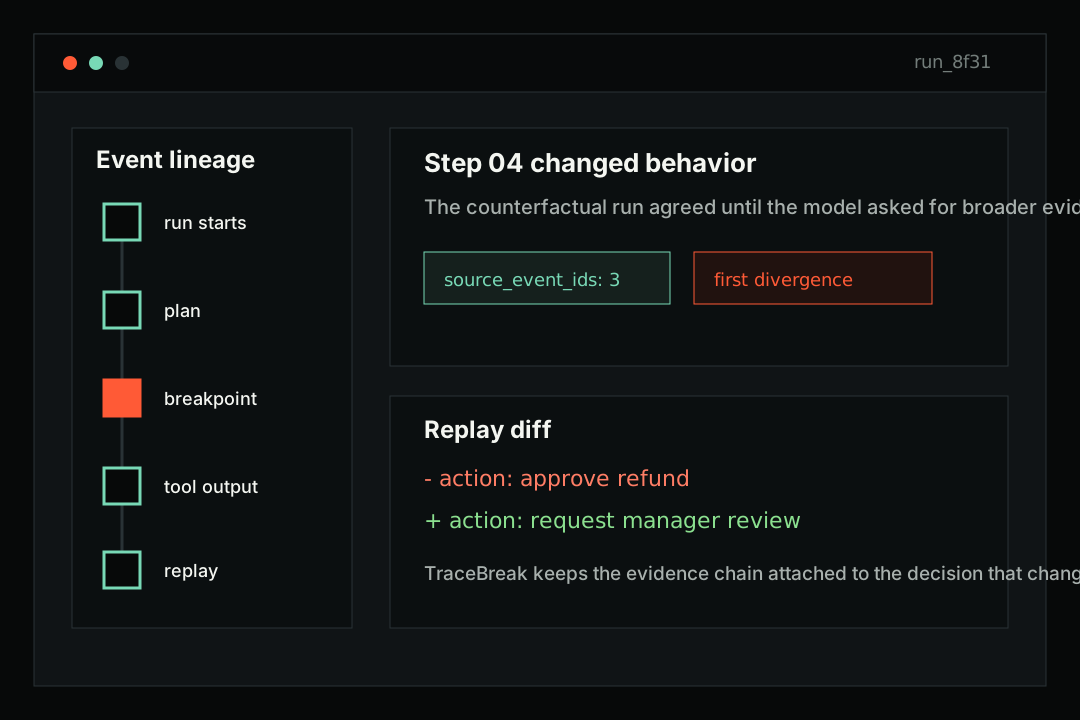
TraceBreak is the operational layer for agentic software. It records every step as linked events, keeps the run loop inspectable, and replays the same chain against counterfactuals when behavior changes.
Product model
Instead of shipping memory, execution, and debugging as separate products, TraceBreak treats them as one event lineage. That gives operators a durable path from final output back to the exact source events and model decisions that produced it.
Capabilities
TraceBreak is intentionally narrow: capture what happened, preserve why it happened, and replay the path that matters.
Typed events, source links, embeddings, vector search, and Cypher traversal sit behind one API. Memory is evidence, not a loose note store.
Each plan, tool call, tool output, and stop reason is written as it happens. The run can be inspected later without reconstructing logs.
Re-run the same lineage against a different prompt, model, or state snapshot and compare where the result diverges.
Workflow
TraceBreak writes linked events from the first goal through the final stop reason.
Start from the output, error, or human escalation and walk backward through source events.
Hold the evidence path constant while changing the model, prompt, or state under test.
Find the first changed decision and attach the replay result to the fix.
Deployment shape
The current stack is built around a Rust service boundary, explicit tenant isolation, and simple HTTP APIs. Teams can start with a single host and grow into managed deployment as the product matures.
Use providers that expose the familiar chat and tool-call shape. Native provider adapters can come later.
Graph, vector, columnar, and provenance live in the storage engine; TraceBreak adds tenant and operator surfaces.
Structured logs, request correlation, metrics, and replay artifacts make incidents easier to explain.
Next step
A demo is strongest with a run you already had to debug manually.